In Part 1 of this series, we discussed our views on the “Organization as a Living System” [Synthology]. In Part 2, we take a deeper look at what this might look like in a particular industry context – in this case: the construction industry.
Viewing your company as a system clarifies what truly moves outcomes: Leadership is the system driver that aligns People, Systems, and Strategy; People – and Teams – are the foundation that executes. That lens is timely as material lead times, tariff volatility, and long‑lead electrical/mechanical equipment remain schedule‑critical for many mid‑sized construction managers, even when in‑house headcount is reasonably stable. It’s worth asking: How intentionally are we shaping our people-practices, enabling systems, and crafting strategy choices so our teams can execute – reliably, week after week? Research continues to show that so‑called power skills – communication, collaborative leadership, and emotional intelligence (EQ) – correlate with stronger project outcomes; construction‑specific studies link EQ to success via team cohesion and stakeholder alignment.
People – The Foundational Element (Talent and Teams)
What to consider about people (individuals):
- Talent pathways that mirror real work. Are you building visible progressions (e.g., foreman → superintendent → PM) with skills‑based pay steps and micro‑credentials that crews trust?
- Enablement at the point of execution. Where are individuals losing time—waiting on information, approvals, or materials—and do they have the decision clarity to act without unnecessary escalation?
What to consider about teams (dynamics):
- Cohesion and trust as schedule assets. Teams that surface issues early and negotiate trade‑offs constructively preserve flow; evidence in construction shows EQ → cohesion → project effectiveness.
- Interfaces and coordination. Do cross‑discipline touchpoints (owner/CM/trades/design) have clear handoffs and agreed escalation routes to reduce decision latency? A single lagging approval can ripple into commissioning risk.
- Retention through rhythm. Predictable look‑ahead commitments, rotations, and feedback cycles often beat sporadic heroics, especially when supply constraints loom.
Signals to watch: Crew‑stability index, First‑pass rework rate, Owner‑facing decision latency (RFI aging), Short team‑cohesion/trust pulses
Systems – Enablers Leaders Choose to Help People Execute
Think system design choices, not software logos – the aim is less friction and more foresight for your people and teams.
- Flow & learning over heroics. A simple production‑control rhythm (pull‑based planning, make‑ready constraint removal, weekly commitments with PPC, short daily huddles) can raise promise reliability and accelerate learning.
- One operational source of truth. Execution improves when models, submittals, RFIs, look‑aheads, procurement status, issues, and approvals live in a unified information hub, so everyone decides from the same facts and decision latency is visible.
- Procurement visible to the schedule. With long‑lead items (e.g., switchgear, transformers), tie schedule logic to live procurement status and trigger alternates, resequencing, or temporary power before commissioning windows are at risk.
- Buffers where JIT is fragile. Identify where logistics buffers and quality gates on critical‑path items protect the plan better than just‑in‑time.
- Industrialize repeatables. For suitable assemblies (e.g., MEP racks, risers), prefab/modular can shift labor off‑site and compress on‑site duration, directly countering long‑lead uncertainty when well governed.
Leader’s dashboard: PPC + reason codes, Procurement heat map (lead‑time risk by package), RFI aging and change‑cycle time, Off‑site work ratio and buffer burn rate
Strategy – Enablers That Orient People to the Right Work
Treat strategy as the choices that remove drag and focus effort:
- Portfolio‑fit lens. Which pursuits or phases match your tolerance for long‑lead exposure, alternates availability, and commissioning risk – and have buffers/options priced explicitly in time and money?
- Clear objectives and roles. Are near‑term objectives and definitions of success unambiguous at each level (owner, CM, trades)? Who decides what, by when, and on which data? Decision‑rights design prevents costly stalls.
- Commercial flexibility. Where might escalation language, submittal sequencing, or owner‑approved alternates create options when tariffs or lead times shift mid‑stream? Collaborative models can reduce adversarial friction.
- Selective industrialization. Where do repeatable scopes justify prefab/modular to protect schedules and labor intensity?
Leadership – The Central Driver
Beyond systems and templates, leadership behaviors determine how well your organization runs as a system.
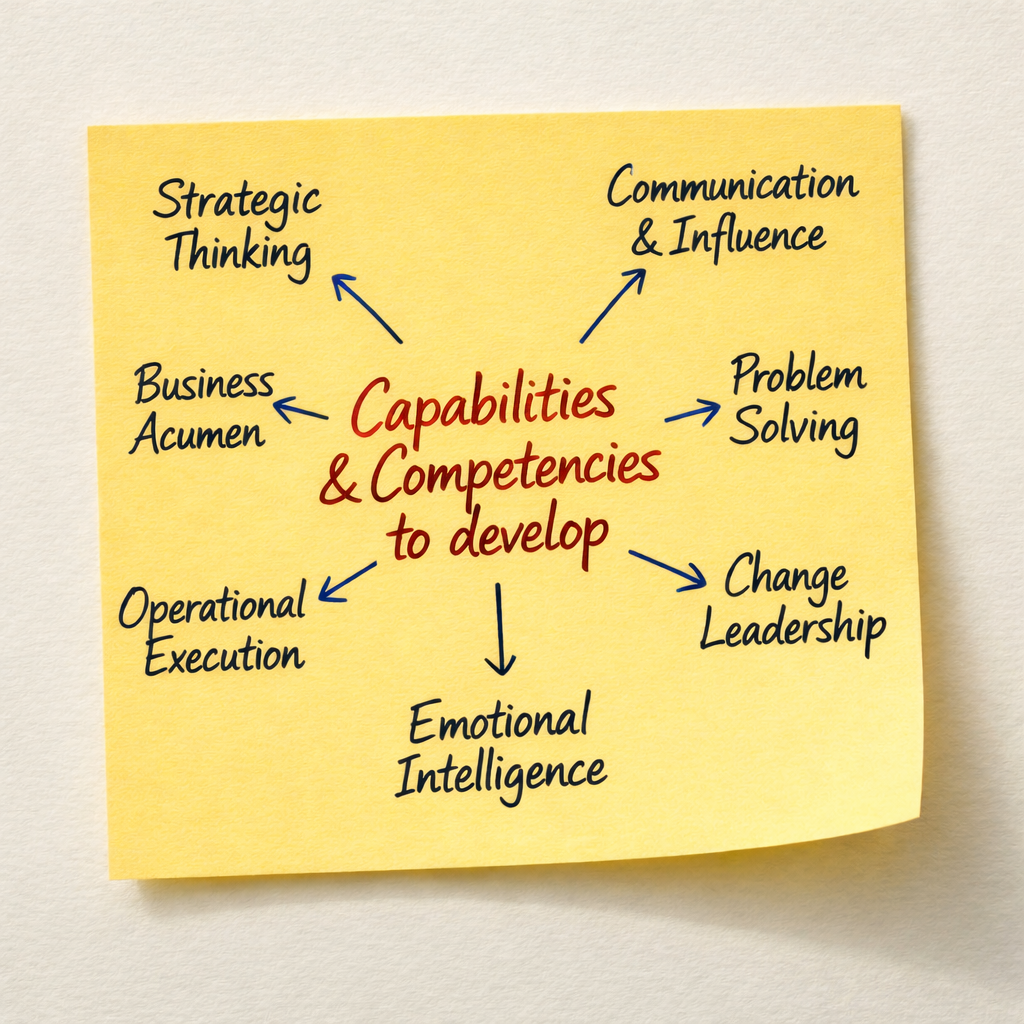
- Power skills move outcomes. Communication, collaborative leadership, change enablement and EQ are consistently linked to higher project performance; in construction, EQ often works through team cohesion to raise effectiveness.
- Design the social contract early. Rapid alignment on decision rights, risk tolerances, and escalation helps fast‑forming teams perform before norms calcify.
- Coach the moments that matter. Weekly rhythms (look‑aheads, commitments, huddles) are where difficult conversations, scope trade‑offs, and negotiation keep plans real.
Leader development at echelon:
- Enterprise / Executives: translate strategy into operating principles, business acumen, decision design, and outcome metrics; model the behaviors you expect in the field.
- Program / Project Leaders (PMs/PEs/Supers): strengthen business acumen, stakeholder alignment, risk framing, and cross‑discipline coordination; practice issue‑clearing conversations.
- Frontline Field and Emerging Leaders (Foremen/Leads): develop baseline business acumen, master short‑interval planning, constraint removal, safety/quality coaching, and crew engagement that stabilizes flow.
Where to Go from Here
As you consider your organization as a system, it may help to reflect – domain by domain – on the few choices that would most enable your people to execute reliably week after week.
- People and teams: pathways & skills clarity; point‑of‑work enablement; cohesion and trust at interfaces; track crew stability, first‑pass rework, decision latency, and team‑cohesion pulses.
- Systems (people enablers): adopt a flow‑and‑learning rhythm; create a unified operational hub; make procurement exposure visible to the schedule; track PPC/reason codes, a procurement heat map, change‑cycle time, off‑site ratio, and buffer burn.
- Strategy (orientation): use a portfolio‑fit lens for long‑lead volatility; clarify objectives, roles, and success; build commercial flexibility and consider selective industrialization. Monitor pursuit fit, risk‑sharing language adoption, contingency use, and margin at completion vs. award.
- Leadership (system driver): practice power skills in the weekly rhythm; establish the team’s social contract early; develop leaders at echelon so decisions, behaviors, and routines reinforce reliability across levels.
Where Synthology Fits – Support Across People, Systems, Strategy, and Leadership
We help construction organizations turn these considerations into action on live projects – by shaping routines, skills, and decision frameworks that teams will use
- People and Teams: co‑design field‑to‑office pathways and skills‑based steps; use concise Team Dynamics insights to surface cohesion/trust and interface frictions, then translate findings into simple team routines (issue‑surfacing, trade‑off conversations, feedback loops).
- Systems (as people enablers): stand up a right‑sized production‑control rhythm; establish a unified operational hub and a procurement heat map that ties long‑leads to schedule logic and commissioning windows; identify repeatable assemblies and set prefab/modular governance where it fits.
- Strategy (to orient and de‑risk execution): facilitate portfolio‑fit and risk lenses (long‑lead density, alternates, commissioning risk); co‑create decision‑rights maps and pragmatic escalation/alternates language so choices keep moving despite volatility.
- Leadership (the driver, developed at echelon): run a three‑tier pathway – Emerging Leaders, PMs/PEs/Supers, and Senior Leaders—focused on difficult conversations, negotiation, stakeholder management, risk framing, change enablement and decision design. A concise Leader Competency readout pinpoints behaviors to practice in the weekly operating rhythm.
How we work: quick discovery → targeted pilots (Leadership + Delivery) → codify what works into Operating Standards & Field SOPs and a concise Runbook – crew‑ready, not a slide deck – measured by PPC, decision latency, procurement visibility, and team‑cohesion pulses.
Greg Boylan, COO
Synthology.co